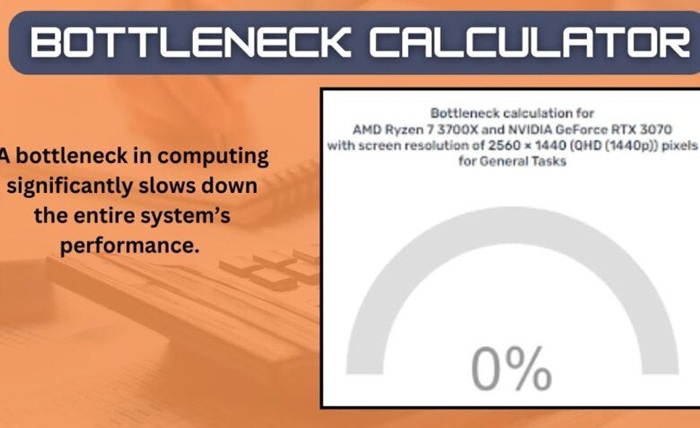
A bottleneck calculator is an online or software-based tool designed to analyze how well your PC components work together, with a primary focus on the CPU and GPU. The bottleneck calculator estimates whether one component is holding back the performance of another, which is commonly known as a performance bottleneck. When users build or upgrade a PC without checking compatibility through a bottleneck calculator, they may end up with wasted potential and lower-than-expected performance.
The importance of a bottleneck calculator becomes clear when you consider modern workloads such as gaming, video editing, streaming, and 3D rendering. In these tasks, a bottleneck calculator helps you understand if your processor is too weak for your graphics card or if your GPU is underpowered compared to your CPU. By using a bottleneck calculator early in the planning stage, users can make smarter purchasing decisions and avoid unnecessary upgrades.
How a Bottleneck Calculator Works in Simple Terms
A bottleneck calculator works by comparing the processing capabilities of your CPU, GPU, and sometimes RAM and resolution settings. The bottleneck calculator uses databases, benchmarks, and performance models to estimate how much one component may limit another. While a bottleneck calculator cannot replicate real-world usage perfectly, it offers a reliable approximation for most users.
When you enter your hardware details into a bottleneck calculator, the tool evaluates scenarios such as gaming at different resolutions or productivity tasks. The bottleneck calculator then produces a percentage or descriptive result indicating whether the CPU or GPU is the limiting factor. This information allows users to decide if they need a better processor, a stronger graphics card, or a more balanced configuration overall.
Types of PC Bottlenecks Identified by a Bottleneck Calculator
A bottleneck calculator is capable of identifying several types of bottlenecks that affect system performance. The most common is the CPU bottleneck, which occurs when the processor cannot keep up with the graphics card. In this case, the bottleneck calculator shows that your GPU is underutilized due to CPU limitations, resulting in lower frame rates and inconsistent performance.
Another common result from a bottleneck calculator is a GPU bottleneck, where the graphics card struggles to keep up with a powerful CPU. The bottleneck calculator may also highlight RAM limitations, storage speed issues, or resolution-based bottlenecks. By understanding these categories through a bottleneck calculator, users gain a clearer picture of how their entire system behaves under load.
Benefits of Using a Bottleneck Calculator Before Building a PC
One of the biggest advantages of using a bottleneck calculator is cost efficiency. A bottleneck calculator helps you avoid overspending on components that your system cannot fully utilize. For example, pairing a high-end GPU with an entry-level CPU might look impressive on paper, but a bottleneck calculator would quickly reveal the imbalance.
Another benefit of a bottleneck calculator is performance optimization. Whether you are a gamer, streamer, or professional creator, a bottleneck calculator ensures that your system delivers consistent and smooth results. By relying on a bottleneck calculator, users can plan upgrades logically instead of guessing, saving both time and money in the long run.
Common Myths and Misunderstandings About Bottleneck Calculator Results
Many users believe that a bottleneck calculator provides perfectly accurate results, but this is a common misconception. A bottleneck calculator offers estimates based on generalized benchmarks, not exact real-world performance. Understanding this limitation helps users interpret bottleneck calculator results more realistically.
Another myth is that any bottleneck percentage shown by a bottleneck calculator is bad. In reality, some level of bottleneck is unavoidable in any system. A bottleneck calculator is best used as a guidance tool rather than a strict rulebook. When users learn how to read bottleneck calculator outputs correctly, they can make informed decisions without unnecessary worry.
How Gamers and Creators Use a Bottleneck Calculator Effectively
For gamers, a bottleneck calculator is extremely useful when targeting specific resolutions and frame rates. A bottleneck calculator can show whether a CPU upgrade is necessary for competitive gaming or if a GPU upgrade would improve visuals at higher resolutions. This makes the bottleneck calculator an essential planning tool for gaming PCs.
Content creators also rely on a bottleneck calculator to balance workloads such as rendering, encoding, and multitasking. A bottleneck calculator helps identify whether CPU cores, GPU acceleration, or memory bandwidth is the limiting factor. By using a bottleneck calculator strategically, creators can build systems that meet both performance and budget requirements.
Choosing the Best Bottleneck Calculator and Using It Correctly
Not all tools are the same, so choosing the right bottleneck calculator is important. A reliable bottleneck calculator should be regularly updated, easy to use, and transparent about how results are calculated. Users should compare results from more than one bottleneck calculator to get a balanced perspective.
Using a bottleneck calculator correctly also means entering accurate hardware details and considering usage scenarios. A bottleneck calculator result for 1080p gaming may differ greatly from 4K gaming or productivity tasks. When users combine real-world knowledge with bottleneck calculator insights, they achieve the most accurate and useful conclusions.
Conclusion
A bottleneck calculator is an invaluable tool for anyone building, upgrading, or optimizing a PC. By highlighting component imbalances, a bottleneck calculator helps users make informed decisions that lead to better performance and smarter spending. While no bottleneck calculator is perfect, using one as a guideline can prevent common mistakes and ensure a well-balanced system.
Ultimately, a bottleneck calculator empowers users to understand their hardware more deeply. Whether you are a beginner or an experienced PC enthusiast, the bottleneck calculator remains a practical resource for achieving optimal performance and long-term satisfaction.
FAQs
1. Is a bottleneck calculator accurate for all systems?
A bottleneck calculator provides estimates based on benchmarks, so while it is helpful, real-world performance may vary depending on usage and settings.
2. Can a bottleneck calculator help with laptop performance?
Yes, a bottleneck calculator can offer insights for laptops, but results may be less flexible due to limited upgrade options.
3. What percentage bottleneck is acceptable in a bottleneck calculator?
Most users consider results under 10–15% acceptable, as some imbalance is normal according to a bottleneck calculator.
4. Should I trust one bottleneck calculator only?
It is better to compare results from more than one bottleneck calculator to get a clearer understanding of system balance.
5. Does a bottleneck calculator consider future games or software?
A bottleneck calculator is based on current data, so future software demands may change how components perform over time.